March 25, 2010

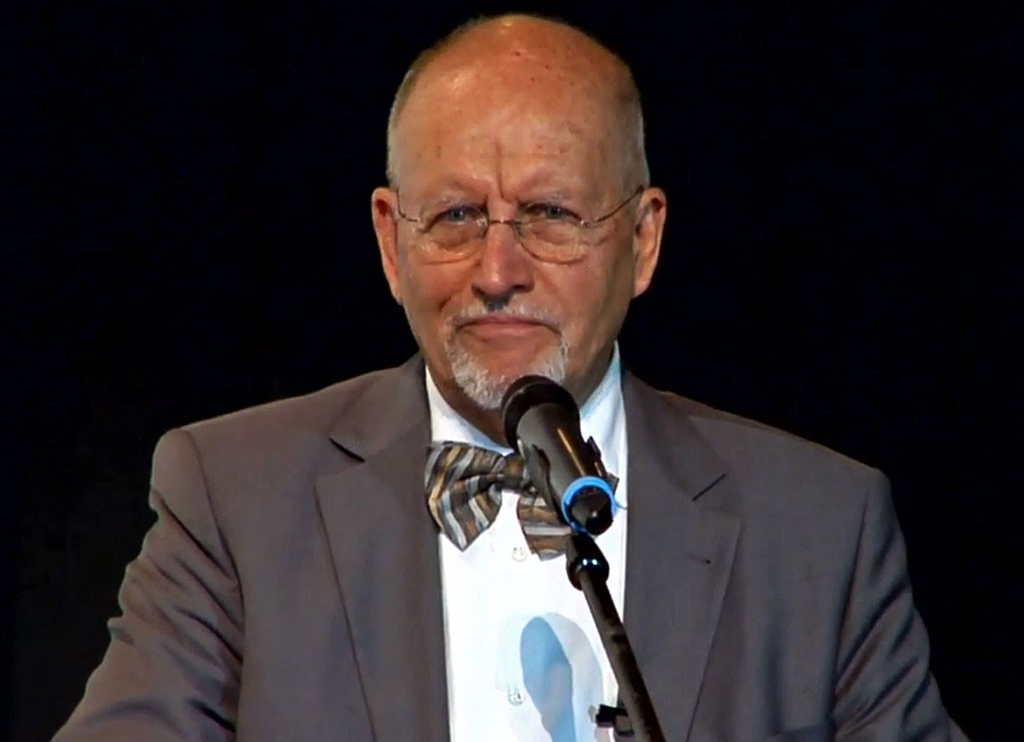
Recollection of a Pilgrim Talk – by Hooper Dunbar, Member of the Universal House of Justice

Haifa, Israel
Friday 5th March 2010


This is most likely the last time that I will address the pilgrims (Mr. Dunbar retires from the House on March 20). You know the pilgrims are referred to as the life blood of the Bahá’í World Centre. And the beloved Guardian used to say that there were two purposes of pilgrimage. The first was to imbibe, fill yourself with the spirit. The second was to impart – that after you leave the World Centre with your stories, memories, and photos, impart that spirit to others, because only a tiny proportion of the Bahá’í world can come on pilgrimage.

‘Abdu’l-Bahá says that no action is more meritorious than remembering and praying for loved ones in the Shrine of Bahá’u’lláh. Ask Bahá’u’lláh’s assistance and forgiveness on their behalf.

When the pilgrims go the Shrines there are all kinds of responses. You may be wondering why everyone around me is in tears and I’m not – am I some kind of dried potato? You may be in the Shrines and remember things about your life that you are not particularly proud of. It happens. What do you do? Friends, leave the things you are not proud of in the Shrines – leave them there. The past is the past. You have to move on. You know Bahá’u’lláh says over and over again that God is the most merciful, the most forgiving God. [e.g: O Thou Provider, O Thou Forgiver! Grant us Thy grace and loving-kindness, Thy gifts and Thy bestowals, and sustain us, that we may attain our goal. Thou art the Powerful, the Able, the Knower, the Seer; and, verily, Thou art the Generous, and, verily, Thou art the All-Merciful, and, verily, Thou art the Ever-Forgiving, He to Whom repentance is due, He Who forgiveth even the most grievous of sins.] Friends, we have to trust that this is the case and move on to serve the Cause, assuming that our past is forgiven. This is one purpose of pilgrimage. But it is God who forgives. We should not play God. We should not think I cannot forgive myself for this or that. Or think how can I arise to do this or that knowing what I have done? God forgives. Move on. Serve the Cause. (Note: Mr. Dunbar was very strong on this point and I am sure helped many).

March 18, 2010

Teaching Problems – A Message from Hand of the Cause Ruhiyyih Khanum, March 18, 1949, Haifa, Israel

We often wonder why it is that when we have the remedy for all the ills of the world, the world won't take it. Sometimes it is very disheartening. We feel we are like a man standing at a fork in the road, voluntarily inconveniencing himself by acting as a signpost. He points right with a sign that reads "Safety This Way" and left is marked "Danger, Precipice", but he finds most people rush the high road to the precipice and very, very few take the little unattractive path to safety. And we Baha'is, always trying to offer our priceless gift, many of us out in strange places as pioneers, many more traveling around as teachers or working hard and eagerly on National, Regional or Local Teaching Committees and allied Committees, wonder what on earth is the matter. Are the people all blind or is there something wrong with us?

The Ills of Mankind

The answer, of course, is, that broadly speaking, the human race today is certainly distracted, and, compared to an absolute standard of normalcy, somewhat demented, and we ourselves are far from being what we should be. The combination of mass disobedience to the Laws of God, and our own incomplete adherence to them, acts as a brake on the success of our labors.

February 23, 2010

Horace Holley – A talk at the Los Angeles Baha'i Center October 23, 1948

[We Owe it to ‘Abdu’l-Baha; The Temple as a Powerful, Silent Teacher]

(Stenographic notes)

The human race is immersed in the ocean of the spirit. Baha'u'llah is universal, and He has surrounded humanity with all the blessings of the Day of God. You and I are aware of the fact that we are immersed in the ocean of the spirit, but the majority of the people are not yet aware, and when we are not aware of the spirit that surrounds and penetrates us, and tries to act upon a reluctant heart and a mind that is full of the shadows of the past, the individual encased in this unawareness is fearful of the spirit because the spirit, to him, is something that threatens what he thinks is the basis of his human personality. It is as though he were constantly being threatened by death-not physical death-but the extinction of what he considers to be his security. Those who are aware of the spirit, and know it can do nothing but bless those who become aware of it, have laid upon themselves the mission of the ages, to remove the obstacles from human personality which shut people out from the Spirit of Baha'u'llah.

In this great Day of God there is no one way to free all souls. The number of ways which are necessary to learn is exactly the number of the Baha'is themselves, which means that every Baha'i has a mission, and if any of us fail to do our part in the quickening of souls, it means we have left certain people in the prison of their human personality, because we have thrown away the keys that would open the doors and make them Baha'is.

February 11, 2010

Ruhiyyih Khanum’s Message to First Canadian National Convention - 1948

To the Delegates and Friends attending the First Canadian National Baha'i Convention.

Dear Friends:

What a blessing and privilege to be allowed to raise my voice on this historic occasion, even though from across two seas, and address these words to you in my own home. You who are gathered here see this room, these walls and doors clearly, but I assure you they rise up before my eyes dimmed by the passing years, sanctified by memory and longing, and what comes to my mind is a nostalgic co-mingling of the past and the future.
Strangely enough the most vivid picture is one neither I—nor probably one of you -- can remember as an eye witness: 'Abdu'l Baha addressing in this very room, a group of believers and guests. The strong, sad, wise face; the silvery hair; the beautiful, understanding blue eyes that swa the reality of things, the reality of evil, the reality of error, of failure and deviation, and yet looked upon all men with a loving and gentle spirit and filled them with hope, -- this is the first and most vivid imprint of all, which surely clings to this house so blessed by His presence. And what He said on that occasion must have for you, I feel, now gathered here to carry on His work at such an important juncture in Canadian history, a special message and a special significance. He opened his speech with these words:

"An hour ago a Young man came here and we discussed together whether nature is perfect or imperfect, light or darkness. I wish now to complete that conversation. Nature--that is, generally speaking, the physical world, the world of nature, if we observe it carefully and seek to probe its mysteries, -- this world of nature is seen to be imperfect, to be dark. Consider carefully: if we leave a plot of earth in its natural state it will remain a field of thistles, it will grow useless weeds; if we leave the hills to themselves the trees will remain fruitless, it is a jungle with no harvest, no order. Therefore, this world of nature is dark, it must be illumined. In what will its illumination lie?"

‘Abdu’l-Baha then went on to answer His own question and point out that cultivation and training in the world of nature has converted the wilderness into harvest-bearing fields, and that just as the physical world would, if left untended, revert to a state of nature which is dark, wild, and fruitless, so men, if abandoned to themselves, if left uneducated, revert to a state resembling that of animals -- nay, even worse than animals, for they can become like the cannibals of Africa, their human qualities of mind and soul remaining wholly undeveloped. Through one simile after another he pointed out that the physical world must be redeemed from its gross state of imperfection through training.

January 27, 2010

The Constitution of the Universal House of Justice - by Ali Nakhjavani

(Transcript of a talk as part of six talks given during a week-long course in February of 2004 on the “World Order of Baha'u'llah”. The event was sponsored by the NSA of Italy. The notes also include questions raised by the participants and Mr. Nakhjavani’s answers. This text, excluding the quotations section, was published in 2005 under the title "Towards World Order". A chapter on “The Covenant” was added in the 2007 edition.)

On October 18th 1927, referring to the Declaration of Trust and By-Laws of the National Spiritual Assembly, Shoghi Effendi wrote the following addressing that National Assembly: "You can but faintly imagine how comforting a stimulant and how helpful a guide its publication and circulation will be to those patient and toiling workers in Eastern lands... You can hardly realise how substantially it would contribute to pave the way for the elaboration of the beginnings of the constitution of the worldwide Bahá'í Community that will form the permanent basis upon which the blest and sanctified edifice of the first International House of Justice will securely rest and flourish."- (BA p.143). In a letter referring to the same subject, addressed to the Bahá'ís in Iran, Shoghi Effendi referred to the need for the Persian National Assembly to have its own constitution, and pointed out that the constitution of National Assemblies is the Greater Law of God's Holy Faith, while the constitution of the Universal House of Justice is its Most Great Law. In 1934, when he wrote his "Dispensation", Shoghi Effendi once again referred to the future constitution of the Supreme Body of the Faith.

When the Universal House of Justice was formed in 1963, it was able to launch its first teaching and consolidation Plan in April 1964, which was the Nine-Year Plan. One of the goals of that Plan, set aside as an objective of the World Centre, was to draft the Constitution governing the operation of the House of Justice, as well as the affairs of the worldwide Bahá'í Community. In view of the mounting cares and responsibilities of the Universal House of Justice, and the meticulous concentration required to produce such a vitally important document, it took most of the nine years under this first Plan to bring this project to conclusion.

January 7, 2010

In the Days of the Guardian – a Talk by Hand of the Cause of God Leroy Ioas in Johannesburg, South Africa, 1958

Dearly beloved friends it’s a very great pleasure for Mrs. Ioas and myself to be in South Africa in the city of Johannesburg to meet the friends here and to have an opportunity to talk with them about the Bahá’í Faith, and particularly this evening about our beloved Guardian, Shoghi Effendi.

If the establishment of the Bahá’í Faith in South Africa, in this difficult area, and it’s very difficult, the very fact that it is difficult will bring about great results in the future, and will produce great Bahá’í teachers and great Bahá’í workers.

Teaching the Cause is disseminating the power of the Holy Spirit, and when you become a teacher of the Cause you become a channel through which the Holy Spirit descends into the world and goes out to those to whom you teach. So actually, the teacher secures greater benefit than the one whom he teaches, because he is then in contact with the power of the Holy Spirit.

In the Holy Land where we, Mrs. Ioas and I, had the privilege of serving the beloved Guardian for six years, you learned a little bit of what it meant to be in contact with the Holy Spirit directly, because you were continuously in the presence of the beloved Guardian, and, as you know, he was like a generator of spiritual power. When you met the Guardian, you could just feel his spiritual power, this penetrating light through your very being, and to move continuously in that power, in that force, is not an easy thing. It was something to aspire to, but I don’t think very many of us actually achieved, very much in the way of nearness to his spirit. The power of the emanating guidance of God descended upon Shoghi Effendi at all times, and in all things he did, and in all of his ways and his actions and deeds, you could see the supreme guidance which he was receiving in the carrying on of Bahá’í work.

December 16, 2009

September 2001 Talks by Douglas Martin -- in Atlanta, New York and Massachusetts

(A collection of 5 sets of notes by various individuals)

Notes Collection # 1

Lesser Peace
The Lesser Peace is a process that started with Woodrow Wilson, when he created the League of Nations. It will be a long time from now before we fully understand what the Lesser Peace was.

Mr. Martin detailed some of the elements in the following parallel processes mentioned by Shoghi Effendi. "...the two parallel processes of integration and disintegration associated respectively with the rising fortunes of God's infant Faith and the sinking fortunes of the institutions of a declining civilization." (Shoghi Effendi: Messages to the Baha'i World, Page: 102) Disintegration: - military buildup - counter-productive economic system - human weaknesses - prejudices - collapsing moral standards Integration: - individuals of capacity and insight like Woodrow Wilson and Eleanor Roosevelt - revolutions in communications and transportation - artists, musicians, soccer players and more working as agents of the awakening of the oneness of mankind - every barrier separating humans into artificial constructs has collapsed - Universal House of Justice peace statement

Seemingly insurmountable obstacles to world peace have been blown away by the Will of God. "Thou seest the mountains and thinkest them firmly fixed: but they shall pass away as the clouds pass away: (such is) the artistry of God, Who disposes of all things in perfect order..." (The Qur'an, The Ant (An-Naml), verse 88)

December 8, 2009

Recollections about Ruhiyyih Khanum – by Violette Nakhjavani

(Transcript of a talk given in East London, South Africa in 2001)

We have been travelling for five weeks so far, and have visited Ethiopia, Kenya, Uganda, Tanzania, Zambia and Zimbabwe. We have been immersed in a sea of singing and of music, and we are so happy and grateful to Baha'u'llah that this trip was possible. I was in South Africa 29 years ago, with Amatu'l-Baha Ruhiyyih Khanum. She left her home in Haifa in July 1969, and didn't get back until April 1973. She was travelling for three years and nine months, and during this time, she visited 60 countries, 34 of which were on the continent of Africa. South Africa was towards the end of the trip, and was very special. South Africa, and all of Africa, was a different place 29 years ago.

South Africa was very, very different. Meetings like this, with mixed races and colors present, were almost impossible. Ruhhiyih Khanum said that this country was the greatest test to her, because she was told since childhood about racial unity, amity between the different races and people, so coming here was a real shock to her. During the four weeks that she was in South West Africa, as it was called then, she would have daily prayers, to be free of any form of prejudice. She would say, Baha'u'llah didn't tell us to chose our prejudice, so we must feel a total lack of prejudice in life. So it was quite hard for her when she was refused permits to see the Baha'is in different areas, so today, she is rejoicing with us. I firmly believe that her spirit is in Africa. She loved this continent, the people, and she had the best years of her life after the passing of the Guardian here.

December 1, 2009

Obedience - an address by Ian Semple

26 July 1991
Baha'i World Centre

The International Teaching Centre has produced a wonderful compilation, which you've all received, of texts on the subject of obedience. I'm assuming that you're familiar with those, and therefore I want to approach the subject from a more general point of view--principally about obedience in relation to freedom of thought and also to discussing the importance of obedience both to the individual's spiritual development and to society as a whole.

Mankind has suffered appallingly from tyranny, throughout virtually its whole history, and obedience has often come to be equated with servility and acquiescence in oppression--or even worse, to be used as an excuse for taking part in oppression. You know, because of having lived in Israel for some time, how often this comes up when the question of the Holocaust is being discussed. Those who took part in the Holocaust said, "Well, I was just obeying orders; I am not the one to blame." Now, because of this history of oppression, obedience has become widely despised, and freedom and "rugged individualism" are prized as true goals of social life. What, then, are we to make of this statement of Baha'u'llah:

“What mankind needeth in this day is obedience unto them that are in authority, and a faithful adherence to the cord of wisdom.”

To understand this we need to see the other side of the picture. We need to appreciate the enormity of the problems mankind is grappling with, which are caused by violent nationalism and tribalism, by individual greed and ruthless competition in economic life, by unbridled permissiveness in morality, and by the ever-growing incidence of crime and terrorism. These are all distortions of freedom.

November 23, 2009

The Lesser Peace and the Most Great Peace – by Ali Nakhjavani

(Transcript of a talk as part of six talks given during a week-long course in February of 2004 on the “World Order of Baha'u'llah”. The event was sponsored by the NSA of Italy. The notes also include questions raised by the participants and Mr. Nakhjavani’s answers. This text, excluding the quotations section, was published in 2005 under the title "Towards World Order". A chapter on “The Covenant” was added in the 2007 edition.)


In order to place this subject in its proper context it would be useful to have a general understanding of the twin processes, frequently expounded in the writings of Shoghi Effendi, of disintegration and integration, as they unfold in the world today.

I feel it would be helpful to look at the parable of the Lord of the Vineyard, as given by Jesus Christ. "A certain man planted a vineyard, and let it forth to husbandmen, and went into a far country for a long time. And at the season he sent a servant to the husbandmen, that they should give him of the fruit of the vineyard: but the husbandmen beat him, and sent him away empty. And again he sent another servant: and they beat him also, and entreated him shamefully, and sent him away empty. And again he sent a third: and they wounded him also, and cast him out. Then said the Lord of the vineyard, What shall I do? I will send my beloved son: it may be they will reverence him when they see him. But when the husbandmen saw him, they reasoned among themselves, saying, This is the heir: come, let us kill him, that the inheritance may be ours. So they cast him out of the vineyard, and killed him. What therefore shall the Lord of the vineyard do unto them? He shall come and destroy these husbandmen, and shall give the vineyard to others." (New Testament, Luke 20:9-16)

Here are a few comments:

November 19, 2009

Education, Scholarship, and Global Civilization - by Peter Khan

(A slightly edited transcript of a talk given by Dr. Peter Khan on 13 August 2006 at the Association for Bahá’í Studies conference in San Francisco, California.
Headings have been added)

THE ENLIGHTENED MIND

The Universal Applicability of Bahá’í Laws and Principles

By way of preamble, I would like to draw your attention to one of the distinctive features of our religion: the fact that we have, as an integral element of the structure of our teachings, the concept of the supremacy of the rule of law. By that I mean that the laws and teachings of our Faith are applicable to all members of the Bahá’í community irrespective of any other consideration. This is relatively unusual; so often in religious communities there are certain individuals who, rightly or wrongly, feel themselves excused from some aspects of their teachings by virtue of their rank, their social standing, or some other consideration; whereas in our religion there are a number of universal principles applicable, without distinction, to all. I want to spend a few minutes – before getting into the meat of my subject – I want to spend a few minutes exploring a few of those universally applicable principles, and I think they can be gathered together under the heading of the “enlightened mind”.

We are all familiar with the fact that religions have, as a matter of course, down through the span of human history, religions have concerned themselves with enlightenment. It’s even been carried to the point of caricature. Janet and I have just spent a few days being very lazy, which included watching television in Northern California. Those of you who have been equally indolent may be familiar with a TV ad for Yellow Pages, some poor soul climbs a mountain to find an individual who is some kind of guru and a source of enlightenment and our traveler seeks guidance from him on how all information can be obtained and this enlightened soul refers him to the Yellow Pages. Be that as it may, the attainment of enlightenment has always been the goal of religion.

November 18, 2009

Learning and the Evolution of the Bahá’í Community - by Paul Lample

Plenary talk given at the 32nd annual conference of the Association for Bahá’í Studies – North America

29 August to 1 September 2008

[Before change took place in the current culture of the Bahá’í community ]

“It is incumbent upon every man of insight and understanding,” Bahá’u’lláh states, “to strive to translate that which hath been written into reality and action.”1 To be a Bahá’í, to “live the life,” means to comprehend the Word of God and act on it, individually and collectively. It is to make the reality of one’s personal life and the pattern of society at large reflect the teachings. Bahá’u’lláh Himself affirms that “the object of every Revelation” is to “effect a transformation in the whole character of mankind, a transformation that shall manifest itself both outwardly and inwardly, that shall affect both its inner life and external conditions.” Otherwise, He observes, “the futility of God’s universal Manifestations would be apparent.”2

Collectively, we receive the gift of the Word of God, and through its application we are to raise the Kingdom of God on earth; that is, we are to gradually contribute to the building of a new social order that is shaped by the truths of the Revelation of Bahá’u’lláh. This statement appears simple, yet implicit in it is a challenge to reflect deeply about how we are to understand and behave. Achieving Bahá’u’lláh’s intended purpose for the human race requires new morals, new ways of generating knowledge, new ways of communicating, new ways of acting, and new institutions. How do we Bahá’ís, with our diverse, sometimes conflicting, understandings of Bahá’u’lláh’s teachings, collaborate to bring about the society that reflects His will? The answer will have to be found in learning, over time, to better understand the text and translate it into efficacious action consistent with its divine intent.

November 16, 2009

Reflections on the Ridvan 2009 Message - by Dr. Peter Khan

A talk by Dr. Peter Khan on 3 July 2009

The Ridvan Message

I’m very very pleased to have the opportunity to speak about a document as significant and of such far reaching importance as the Riḍván 2009 Message.

As you know it was and is unique, as far as I can tell, among the various messages of the Universal House of Justice in its brevity and in its tone. It comes hard on the heels of a remarkable event, unprecedented in the history of the Cause, or indeed in the history of the religion throughout the world; and that was the convening, at the instruction of the Universal House of Justice, and with the invaluable assistance of the Members of the International Teaching Centre, of a series of 41 Conferences held throughout the length and breadth of the planet, attended by some eighty thousand people.

As you are, I am sure, aware, that series of conferences had a galvanizing effect on the Bahá’í Community throughout the world and ultimately on the larger society. It was a tangible demonstration of the global spread of the Faith and it created a most welcome surge toward the goal of 1500 Intensive Programs of Growth by the end of the present plan.

This Riḍván Message can be regarded as celebratory in term: celebrating the fact that we have achieved an important milestone in reaching some 1000 Intensive Programs of Growth by Riḍván 2009, and expressing the confidence of the Universal House of Justice that the goal of the Five Year Plan would be accomplished.

My purpose tonight is not to dwell specifically on those details, but rather to share with you my thoughts about what I see to be two underlying issues, the exploration of which I believe to be crucial to a deeper understanding of this Riḍván Message and indeed of the direction in which the faith is now going.

These two issues which I will address in turn have firstly to dwell upon the significance of Bahá’í activity at the present time in the history of the world, and secondly to examine the question of change in religion.

November 13, 2009

Baha'i Saints, Heroes, Martyrs and Administrators - by Hartmut Grossman

Notes of a talk given by Universal House of Justice Member Hartmut Grossman to the first group of Baha’i Pilgrims to enter the Cell of Baha’u’llah after a break of eight years. This talk was given on the evening of October 30th, 2003.

The Universal House of Justice views the re-opening of the Cell of Baha’u’llah as being a very significant event, so much so that prior to the pilgrims’ visit, all of the members went to the Cell as a Body to say special prayers.

We should remember the suffering that occurred at this prison - the prison designated by Him as the Most Great Prison, which is deeply significant considering the conditions under which He suffered in the ‘Black-Pit’, the Siyah-Chal, in Tehran. He had just arrived when he was forced to sell His carpet, the carpet He used to sleep on, to pay for the funeral expenses of one of the members of His entourage. Even after paying the expenses, the body was still treated very disrespectfully, but He had to make the attempt. It was while confined to this Cell that He sacrificed His son. Many, many other afflictions were faced by Him there.

Many events of note also took place in this Cell, one of which was His giving the Tablet to the Shah of Persia to Badi for its delivery. Baha’u’llah had written the Tablet prior to His arrival in Acco, but there was not a believer at that time who exhibited the necessary levels of devotion and sacrifice. So to give the Tablet to Badi, He bound the eyes of the guards so that Badi could be smuggled into His presence and safely back out again. The second Tablet to Napoleon and the Tablet to Queen Victoria were also written from this Cell.